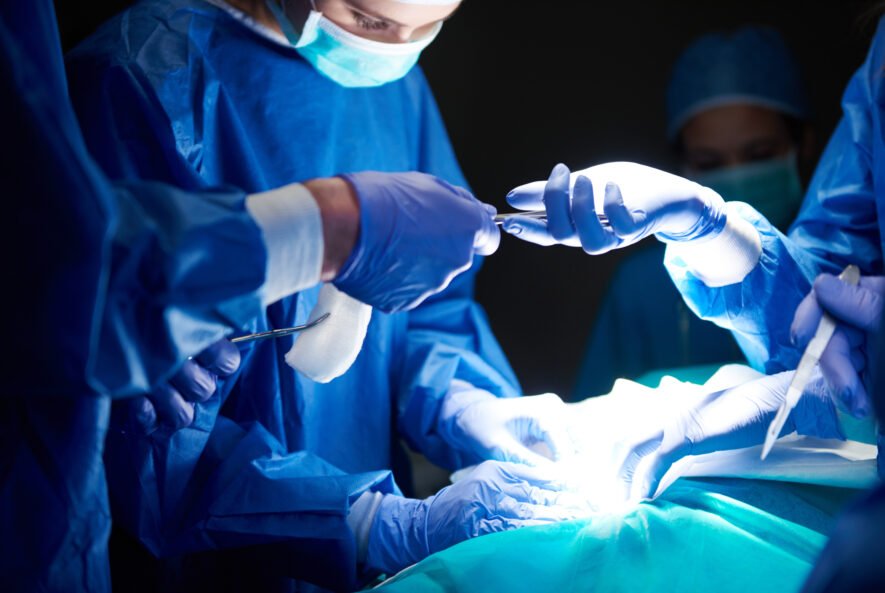
If you’ve just been told you need an operation, the first question on your mind is probably: is hernia surgery dangerous? It’s a completely normal worry. Any procedure that involves anesthesia and incisions carries some risk, but hernia repair is one of the most commonly performed and well-studied surgeries in the world. In this guide, we’ll break down exactly how safe the procedure is, what real risks exist, and what recovery looks like — so you can walk into your consultation with clear, honest answers instead of guesswork.
What is Hernia Surgery and Why Is It Done?
Before answering is hernia surgery dangerous, it helps to understand what is hernia surgery in the first place. A hernia happens when an internal organ or tissue pushes through a weak spot in the surrounding muscle wall, creating a visible bulge. Hernia surgery repairs this weak spot, usually by pushing the tissue back into place and reinforcing the area with mesh so it doesn’t happen again.
Doctors generally recommend surgery because hernias don’t heal on their own and tend to get larger over time. Left untreated, a hernia can become trapped or lose its blood supply — a medical emergency that’s far riskier than a planned operation. So while people ask is hernia surgery dangerous, the more useful comparison is often: how dangerous is not treating it?
Is Hernia Surgery Dangerous? What the Evidence Shows
In short, is hernia surgery dangerous is a question with a reassuring answer for most patients: no, not in the way people fear. Hernia repair is classified as a routine, low-risk elective surgery when performed by a qualified surgeon on a healthy or moderately healthy patient. Complication rates for both open and laparoscopic hernia surgery are low, and serious, life-threatening events are rare.
That said, “low risk” doesn’t mean “zero risk.” Like any surgery involving anesthesia, there’s always a small chance of complications. Understanding what those risks actually are — rather than relying on general anxiety — is the best way to judge is hernia surgery dangerous for your specific situation.
Common Risks Associated With Hernia Surgery
Whether you’re considering inguinal hernia surgery, umbilical hernia surgery, or hiatal hernia surgery, the possible complications are broadly similar. Here’s what surgeons typically discuss before the procedure:
- Infection at the incision site – This is the most common complication across all types of hernia repair. It’s usually treatable with antibiotics if caught early, and modern sterile techniques have made it increasingly rare.
- Bleeding or hematoma – Minor bleeding under the skin can occur, especially with open repair, and usually resolves on its own without further treatment.
- Reaction to anesthesia – A small percentage of patients experience nausea, grogginess, or in rare cases, more serious anesthesia-related complications, which is why a pre-surgery anesthesia review is standard practice.
- Nerve damage or chronic pain – Occasionally, surgery can irritate nearby nerves, leading to numbness or lingering discomfort, particularly after inguinal repair.
- Hernia recurrence – The hernia can return, especially if mesh isn’t used or if the patient resumes heavy strain too soon after surgery.
- Mesh-related complications – With hernia mesh surgery, there’s a small chance of mesh migration, rejection, or infection, though these events are uncommon with modern mesh materials.
Each of these risks is manageable and, in most cases, avoidable with proper post-operative care. This is exactly why the question is hernia surgery dangerous tends to worry patients more than the actual statistics justify. When patients search is hernia surgery dangerous online, they’re often picturing worst-case scenarios that are far less common in real surgical practice than the internet suggests.
Laparoscopic vs Open Surgery: Does the Technique Change the Risk?
Many patients wonder whether choosing laparoscopic hernia surgery changes the answer to is hernia surgery dangerous. Laparoscopic repair uses small incisions and a camera, which generally means less tissue trauma, reduced post-operative pain, and a quicker return to daily activities compared to open surgery. However, it also requires general anesthesia and a more specialized surgical skill set, so the choice between techniques usually comes down to the type and size of hernia, the surgeon’s expertise, and the patient’s overall health — not one method being inherently “safer” than the other.
It’s also worth noting that laparoscopic hernia surgery cost tends to be higher than open repair, and hernia surgery cost overall varies depending on the hospital, city, and complexity of the case. Cost shouldn’t be the deciding factor in safety, but it’s a practical consideration most patients weigh alongside the medical advice. Neither option makes is hernia surgery dangerous more or less true — both are considered safe when performed correctly.
Is Hernia Surgery Dangerous for Everyone Equally?
No — risk isn’t evenly distributed across all patients. The honest answer to is hernia surgery dangerous depends heavily on individual health factors, which is why surgeons personalize their risk assessment rather than giving a one-size-fits-all answer.
Who Is at Higher Risk During Hernia Surgery?
While is hernia surgery dangerous has a generally reassuring answer for the average patient, certain groups face a higher chance of complications:
- Older adults or patients with heart or lung conditions – Pre-existing conditions can make anesthesia and recovery more complicated, so surgeons often run additional pre-op screening.
- People with obesity – Excess weight can increase surgical difficulty and slightly raise infection risk, particularly in umbilical hernia repair.
- Smokers – Smoking slows wound healing and increases the risk of respiratory complications during anesthesia.
- Patients with large or recurrent hernias – Bigger defects and repeat surgeries are technically more complex and carry a slightly higher complication rate.
If you fall into one of these categories, your surgeon will usually take extra precautions, which is another reason a thorough pre-surgical evaluation matters more than the general question of is hernia surgery dangerous. Even so, patients in these higher-risk groups still generally have positive outcomes, which is worth remembering whenever the question is hernia surgery dangerous starts to feel bigger than it actually is.
What Recovery Looks Like After Hernia Surgery
Most patients recover from hernia surgery without major issues. After open repair, recovery typically takes three to four weeks before returning to normal activity, while laparoscopic hernia surgery often allows people back to light activity within one to two weeks. Pain is usually manageable with prescribed medication, and most surgeons recommend avoiding heavy lifting and strenuous exercise for several weeks to reduce the chance of recurrence.
Watching for warning signs — such as fever, spreading redness, unusual swelling, or persistent pain — is the best way to catch a complication early. If any of these appear, contacting your surgeon promptly is far more useful than trying to self-diagnose whether is hernia surgery dangerous applies to your case after the fact. In fact, most patients who ask is hernia surgery dangerous during recovery are simply experiencing normal post-surgical soreness rather than an actual complication.
How to Reduce Your Risk Before and After Surgery
If is hernia surgery dangerous is still on your mind, know that you have real influence over your own outcome. You can meaningfully lower your own risk profile with a few simple steps:
- Choose an experienced surgeon – A surgeon who regularly performs hernia repairs, whether inguinal, umbilical, or hiatal, will generally have lower complication rates.
- Disclose your full medical history – Being upfront about medications, allergies, and existing conditions helps your surgical team plan around your specific risks.
- Follow pre-op instructions exactly – This includes fasting guidelines and stopping certain medications, which reduces anesthesia-related risks.
- Stick to post-op restrictions – Avoiding heavy lifting and following wound-care instructions significantly lowers the chance of infection or recurrence.
- Attend follow-up appointments – Early detection of any issue makes treatment simpler and faster.
Conclusion
So, is hernia surgery dangerous? For the vast majority of patients, the honest answer is no — it’s a routine, well-established procedure with a strong safety record, whether performed as open or laparoscopic hernia surgery. Real risks exist, as they do with any surgery, but they’re generally minor, manageable, and far outweighed by the risks of leaving a hernia untreated. The best way to feel confident going in is an open conversation with your surgeon about your specific health history, the technique being recommended, and what recovery will realistically look like for you. Asking is hernia surgery dangerous is a good instinct — it just shouldn’t stop you from getting timely, effective treatment.
FAQs –
Is hernia surgery dangerous for older adults?
It carries slightly higher risk due to potential heart, lung, or mobility issues, but with proper pre-surgical screening, most older adults undergo hernia surgery safely.
Is hernia surgery dangerous compared to leaving a hernia untreated?
No — an untreated hernia can become strangulated, which is a medical emergency. In most cases, planned surgery is far safer than delaying treatment.
What is hernia surgery recovery time, and does it affect safety?
Recovery typically takes one to four weeks depending on the technique used. Following recovery guidelines closely reduces the risk of complications like recurrence or infection.
Does hernia mesh surgery carry more risk than surgery without mesh?
Hernia mesh surgery has a very low complication rate and significantly reduces recurrence compared to non-mesh repair, making it the standard, well-tolerated approach today.
Does hernia surgery cost affect the safety or quality of the procedure?
Not directly. Hernia surgery cost mainly reflects hospital tier, technique, and mesh type — not the safety of the procedure itself, which depends on surgeon skill and patient health.
Medically Reviewed By Dr. Himanshu Gupta, Orthopedic Surgeon

Dr. Himanshu Gupta
Dr. Himanshu Gupta is an internationally trained orthopedic surgeon specializing in sports medicine and knee replacement surgeries. A Gold Medalist from King George’s Medical College, Lucknow, he holds an M.Ch (Orthopaedics) from the University of Seychelles and has completed advanced fellowships in joint replacement from leading hospitals in India and Germany.
Know More About Author