Does your knee hurt when climbing stairs but feel normal while walking on flat ground? You may also experience discomfort when coming downstairs or getting up from a chair.
Knee pain while climbing stairs can result from problems affecting the kneecap, cartilage, muscles, or tendons. Stair climbing puts additional pressure on the knee compared with walking on a flat surface.
Many causes can be managed with appropriate and early treatment, physiotherapy, and lifestyle changes. However, identifying the underlying cause is crucial for choosing the right treatment.
Why Does Knee Pain Occur While Climbing Stairs?
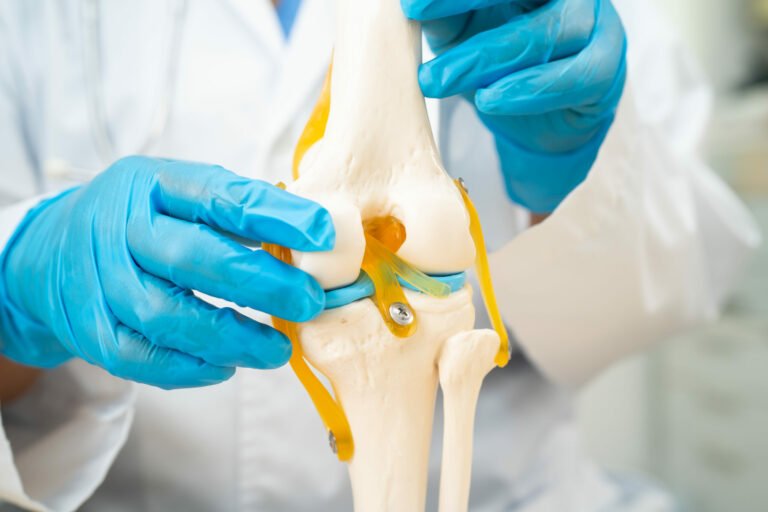
Walking on flat ground places a moderate load on the knee. Climbing stairs is very different. Each step requires the knee to bend deeply while the thigh muscles lift your full body weight, so pressure behind the kneecap (the patellofemoral joint) and across the joint cartilage rises sharply.
If the cartilage is worn, the kneecap is not tracking well, a tendon is irritated, or the thigh muscles are weak, stairs expose the problem. That is why many people feel pain on stairs long before they feel it while walking.
7 Common Causes of Knee Pain While Climbing Stairs
1. Patellofemoral Pain Syndrome (Runner’s Knee)
Pain around or behind the kneecap caused by irritation where the kneecap glides over the thigh bone. It is common in young adults, women, and people with weak hip or thigh muscles.
- Dull, aching pain at the front of the knee
- Worse going up or down stairs, squatting, or after sitting for long periods
- Often eased by rest and strengthening
2. Knee Osteoarthritis
Gradual wear of the joint cartilage, most common after age 50. Stairs often become painful before walking does.
- Pain, stiffness, and swelling, especially in the morning or after rest
- Grinding or clicking (crepitus) when bending
- Pain worsens over months or years
3. Chondromalacia Patella
Softening and wear of the cartilage under the kneecap, often a precursor to arthritis in the patellofemoral joint.
- Grating sensation behind the kneecap
- Pain when climbing stairs, kneeling, or standing up from a chair
- Sometimes mild swelling
4. Meniscus Tear
A tear in the cartilage cushion between the thigh bone and shin bone, caused by a twisting injury or by age-related degeneration.
- Pain along the inner or outer joint line
- Catching, locking, or a feeling of the knee giving way
- Swelling a day after injury
5. Patellar Tendinitis (Jumper’s Knee)
Overuse inflammation of the tendon that connects the kneecap to the shin bone.
- Pain just below the kneecap
- Worse with stairs, jumping, and running
- Tender when pressed
6. Quadriceps Weakness and Muscle Imbalance
Weak thigh and glute muscles cannot control the knee, so joint structures take more load than they should.
- Knee feels unstable or tired on stairs
- Pain improves as strength improves
- Common in desk workers and after periods of inactivity
7. Ligament Injury or Instability (ACL, MCL)
A previous or ongoing ligament injury can make the knee feel loose and cause pain on stairs, particularly on the way down.
- A sense of the knee buckling or giving way
- Swelling after activity
- History of a sports injury or twisting accident
Why Does My Knee Hurt on Stairs but Not While Walking?
Stairs demand more from the knee than walking does. They need a deeper bend, more muscle force, and a heavier load on the kneecap, so problems that stay hidden on flat ground appear on stairs.
Going upstairs:
- The quadriceps work hard to lift your body, which stresses the kneecap and the front of the knee
- Typical in patellofemoral pain, chondromalacia, and early arthritis
Going downstairs:
- The knee must control your body weight as it lowers, which loads the kneecap and the tendons
- Often linked to patellar tendinitis, meniscus problems, quadriceps weakness, and instability
Pain that appears only on stairs is often an early warning. Addressing it early can prevent progression.
Common Symptoms Associated with Knee Pain on Stairs
Knee pain on stairs rarely comes alone. Recognising the accompanying symptoms helps point to the likely cause and shows how urgently the knee needs attention.
- Aching or sharp pain at the front, inner, or outer knee
- Stiffness after sitting or in the morning
- Swelling or puffiness around the joint
- Clicking, grinding, or popping when bending
- A feeling of the knee giving way or locking
- Weak, tired thigh muscles
- Pain after standing from a deep chair or squatting
- Needing to hold the handrail or take stairs one step at a time
How Is the Cause of Knee Pain Diagnosed?
An appropriate diagnosis shapes the right treatment.
Clinical examination:
- History of when the pain started, which stairs aggravate it, and any injury
- Checking swelling, alignment, range of motion, muscle strength, and ligament stability
- Special tests for the meniscus, kneecap tracking, and ligaments
Investigations if needed:
| Test | What It Shows
|
| X-ray | Joint space narrowing, bone spurs, alignment, arthritis |
| MRI | Meniscus, ligaments, cartilage, tendons |
| Ultrasound | Tendon and soft-tissue inflammation |
| Blood tests | Inflammatory or rheumatological causes, vitamin D levels |
Is It Harmful to Keep Climbing Stairs With Knee Pain?
It depends on the pain. Mild, short-lived discomfort that settles with rest is usually not harmful, and staying active helps knee health. But pushing through constant or worsening pain can aggravate the problem.
Keep going with care if:
- Pain is mild and settles within a few hours
- There is no swelling, locking, or giving way
Stop and get assessed if:
- Pain is sharp or getting worse
- The knee swells, locks, or gives way
- Pain continues at rest or at night
Use the handrail, take one step at a time, and lead with your stronger leg going up and your weaker leg going down.
Treatment Options for Knee Pain While Climbing Stairs
Non-Surgical Treatment
- Rest and activity changes: Reduce deep squatting and repeated stairs during flare-ups
- Ice or heat: Ice for swelling, heat for stiffness
- Pain relief: Short-term anti-inflammatory medicines or topical gels, as advised by your doctor
- Physiotherapy: Strengthening, stretching, and kneecap-tracking correction, which is the main treatment for most causes
- Weight management: Each kilogram lost reduces the load across the knee several times over with every step
- Knee braces or supportive footwear: For selected patients
- Injections: Corticosteroid, hyaluronic acid, or PRP in selected cases, after specialist advice
Surgical Treatment (When Needed)
- Knee arthroscopy: Keyhole surgery for meniscus tears or loose fragments
- Ligament reconstruction: For significant ACL or other ligament injuries
- Osteotomy or partial knee replacement: For selected early-to-moderate arthritis
- Total knee replacement: For advanced arthritis when other treatments no longer help
Best Exercises to Reduce Knee Pain While Climbing Stairs
Strong thigh and hip muscles take load off the knee joint. Start gently and stop if pain increases.
- Straight leg raises: Lie on your back, tighten the thigh, and lift the straight leg 20-30 cm. 10-15 reps
- Mini squats: Bend the knees to about 45 degrees with your back against a wall. 10-12 repeats
- Step-ups (low step): Step up and down slowly, using a handrail. 10 repeats
- Glute bridges: Lift the hips with knees bent to strengthen the glutes. 12-15 repeats
- Clamshells: Side-lying hip strengthening for knee alignment. 12-15 repeats
- Hamstring and calf stretches: Hold 20-30 seconds each
Ask a physiotherapist to check your technique, as the right exercises depend on the cause.
How to Prevent Knee Pain While Climbing Stairs
Most stair-related knee pain can be reduced with simple daily habits that protect the joint and strengthen the muscles around it. Small changes made early prevent minor discomfort from turning into a long-term problem.
- Maintain a healthy body weight
- Strengthen your quadriceps, hamstrings, glutes, and core regularly
- Warm up before exercise and stretch afterward
- Wear supportive, cushioned footwear
- Take breaks during long periods of sitting
- Increase stair-climbing or walking distance gradually
- Use the handrail and avoid skipping steps
- Treat knee injuries early rather than ignoring them
When Is Knee Replacement Considered?
Knee replacement is considered only after non-surgical treatment has failed. It may be recommended when:
- Pain from advanced arthritis limits walking, stairs, and sleep
- X-rays show severe cartilage loss or bone-on-bone contact
- Physiotherapy, medicines, and injections no longer give relief
- Everyday activities and quality of life are significantly affected
Most patients with stair-related knee pain never need surgery, especially when the problem is treated early.
When Should You See an Orthopaedic Doctor for Knee Pain?
Mild knee pain often settles with rest and simple exercises, but constant or worsening symptoms need a proper assessment. Seeing a doctor early makes it easier to treat the cause without surgery.
See an orthopaedic doctor if:
- Pain lasts more than 2-3 weeks despite rest and exercises
- The knee swells repeatedly, locks, or gives way
- Pain is present at night or at rest
- You have had a recent injury or fall
- Stairs have become difficult, or you avoid them altogether
Seek urgent care for:
- Sudden severe swelling after an injury
- Inability to bear weight on the leg
- Redness, warmth, and fever with a painful knee (possible infection)
Frequently Asked Questions
-
How do I stop knee pain when climbing stairs?
Reduce the load by resting from aggravating activity, strengthening your thigh and hip muscles, managing your weight, using a handrail, and wearing supportive footwear. Constant pain needs assessment to find the cause.
-
What vitamin deficiency causes knee pain?
Low vitamin D is the most common, as it affects bone and muscle health. Low calcium, magnesium, and vitamin B12 may also contribute to joint and muscle pain. A blood test can confirm this before you take supplements.
-
Should I stop climbing stairs if my knee hurts?
Not necessarily. Mild pain that settles quickly is generally fine, and staying active helps. Reduce stairs if pain is sharp or worsening, or if there is swelling, locking, or giving way, and get checked.
-
How can I lubricate my knees naturally?
You cannot directly lubricate a joint, but you can support it. Regular low-impact movement, staying hydrated, a healthy weight, and an anti-inflammatory diet with omega-3 fats all help joint health.
-
How can I repair my knees naturally?
Damaged cartilage does not fully regrow, but strengthening the muscles, losing excess weight, staying active, and eating well can reduce pain and slow wear. Structural damage needs medical assessment.
-
Can vitamin D reduce knee pain?
It can help if you are deficient, as vitamin D supports bone and muscle strength. It will not relieve knee pain caused by other factors, so check your level first.
-
Can vitamin B12 help knee pain?
Only if you are low in B12, deficiency can cause nerve-related pain and weakness, but B12 does not treat arthritis or structural knee problems.
-
Which is better, walking or climbing stairs?
Walking is gentler and better for painful knees. Stairs build more strength and burn more calories but load the kneecap more, so add them gradually once pain-free.
-
What sleeping position is best for knee pain?
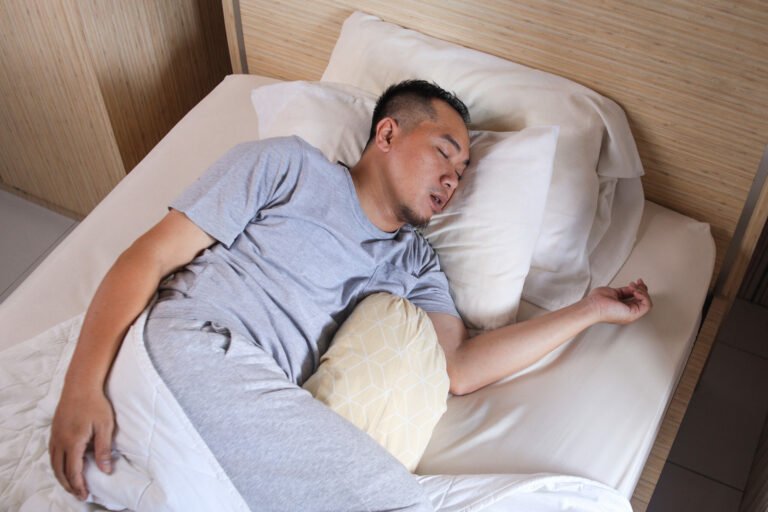
Sleeping on your back with a small pillow under the knees, or on your side with a pillow between the knees, reduces joint stress. Avoid sleeping with the knees tightly bent for long periods.
-
What is the one mistake that makes bad knees worse?
Ignoring early pain and pushing through it, or the opposite, stopping all movement. Both weaken the muscles that protect the knee. Gentle, guided strengthening works best.
Conclusion
Knee pain while climbing stairs is a common warning sign. It can come from the kneecap, cartilage, tendons, meniscus, or weak muscles, and it often responds well to targeted physiotherapy, weight management, and early treatment. The key is to find the cause rather than live with the pain.
Amicare Hospital, the best orthopaedic hospital in Ghaziabad, provides complete knee care, from accurate diagnosis and physiotherapy to arthroscopy and joint replacement, with experienced orthopaedic specialists.